MOTHER’S EARLIEST MEMORIES OF SCHOOL ca. 1890
Notes written by Miss Maggie Moore
Mrs Moore remembered going to the school run by Miss Jennings and her sister in part of what is nowLancasters’ house. (Formerly called The Cottage, now known as Jasmine Place, a thatched cottage until the 1970’s at the bottom of Church Street).
The teacher had a long cane which reached to the back of the room. Reading, writing and needlework were taught to the infants. Miss Jennings was paid by Lady Jersey.
A small fee had to be paid each week for attending the ordinary school where attendance was not compulsory. She remembered giving her sister Nellie sweets to stay at home and help with the housework so that she could go to school.
Later memories of Middleton School
Lady Jersey founded a school for female children at Middleton. Mrs Moore remembered Lady Jersey coming to ask her mother which daughter she could spare. She was always glad that her sister was chosen rather than herself.
One girl was taken from each village that Lord Jersey owned and they were given a good training for domestic service, attending ordinary school during the day but each had a certain amount of house work to do. There were 6-8 girls living there. They went to Church dressed in red cloaks and hats with Lady Jersey taking them for Sunday school.
After a holiday at home Mrs. Moore would walk with her sister as far as Middleton Riding. The girls had to return to Middleton by9.00 a.m. Later they were found posts in the big house.
MORE MEMORIES OF MRS. MOORE
First place in domestic service.
At 13 she was sent toOxfordwhere she was met by her employers at the station. She carried a bunch of flowers so that they would recognize her. Church bells were tolling for the death of Princess Alice. They went by horse bus to a house in St. Aldates where a small private day school was run by two ladies. She looked out at the boats nearFollyBridgeand was very homesick for a long time.
She caught rheumatic fever through sleeping in a damp bed and had to leave.
Miss Moore’s notes were given to me by her sister Mrs. Gillam.
Rosemary Arnold
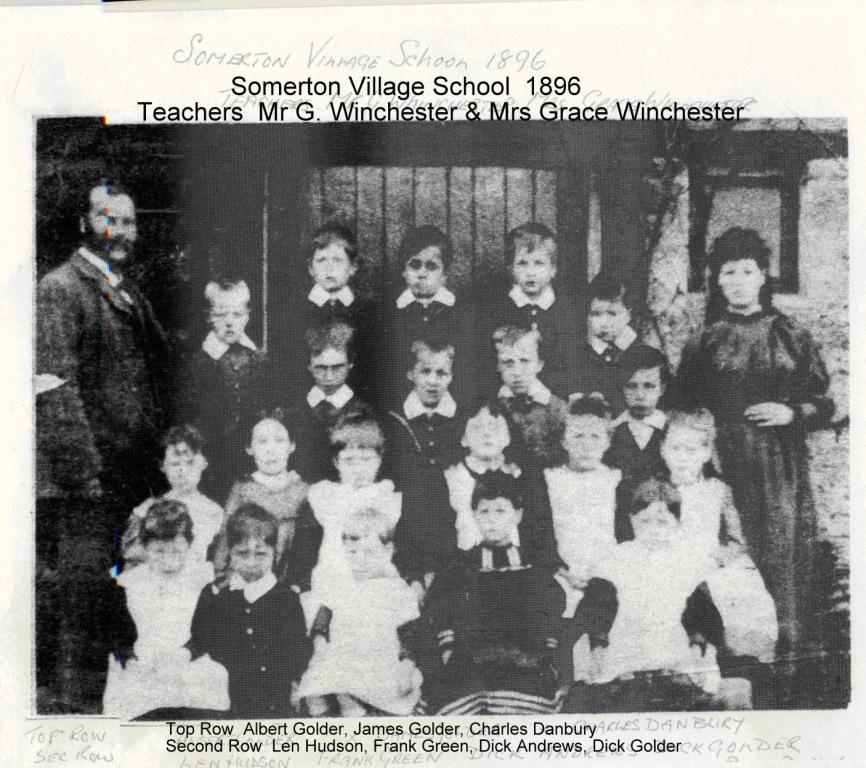
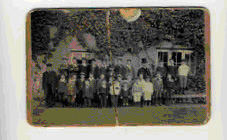
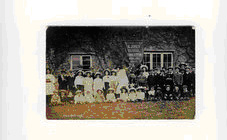
Old Photographs of Somerton School.
The photo dated 1896 is shown by courtesy of Mrs V.Millar, Australia.
New Research, 2026
Added October 2026. Each item below has been checked against the source named with it. Where only a transcript or a later account has been seen, that is said.
The night the runway went dark
In 1964 Don McBeth was a young Post Office telephone wireman, one of a gang sent up from the Brighton area to modernise small exchanges round Oxford, Somerton among them. Their supervisor, Mick, an Irishman, liked a long lunch, and the men often worked into the evening.
One night they disconnected the old equipment. Nobody had told them that a remote unit for the runway lights at RAF Upper Heyford ran through the Somerton exchange. By Don's account no aircraft could take off or land for about four hours, and at two in the morning American military police collected Mick and drove him to the exchange to explain himself. Nothing more came of it.
"We never did find out who cut the wrong cable," he wrote, "but one thing I can tell you for certain, it wasn't me!"
This is Don's memory, published many years later. No official record of the incident has been found.